
Controlling risks is the most important step in the risk management process. Once hazards have been identified and assessed, practical measures must be taken to eliminate or minimise them, keeping your team safe and your operations running smoothly.
Every workplace is unique, and the best combination of control measures will be tailored to your organisation’s size, industry, and the specific tasks your staff perform.
The Hierarchy of controls
When it comes to physical hazards, the hierarchy of controls provides a structured approach to managing risks. This framework ranks control measures from the most effective to the least, helping you select the best combination of actions to protect your workers.
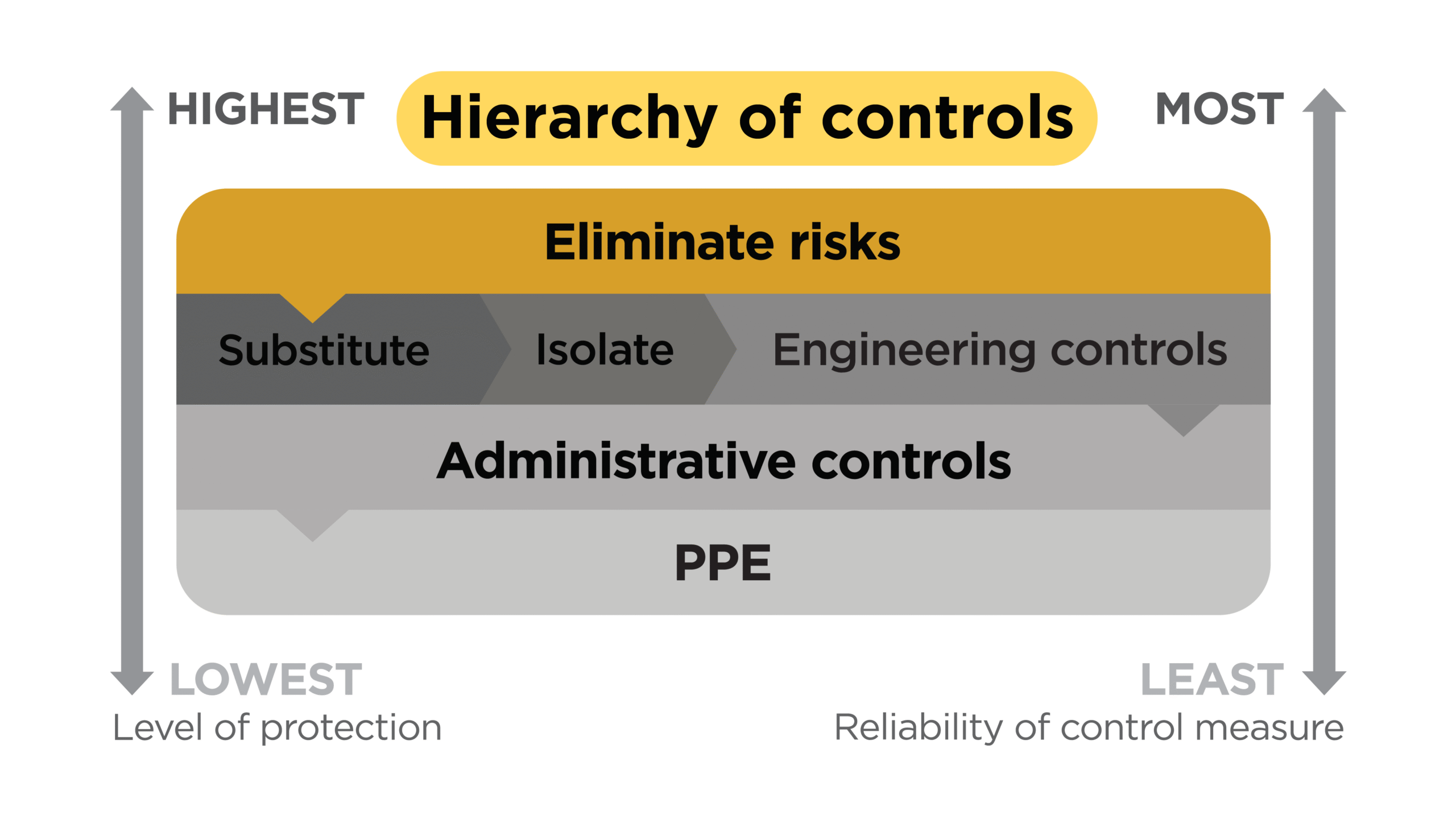
Elimination: Completely remove the hazard from the workplace whenever possible. Ask yourself: Can the task be avoided, performed differently, or redesigned to remove the risk entirely?
Substitution: Replace the hazard with something less dangerous, such as using non-toxic chemicals instead of toxic ones, or safer tools and materials that achieve the same outcome.
Isolation: Separate people from the hazard, for example through barriers, enclosures, or restricted access. Swipe card entry systems, fencing, or dedicated work zones can all reduce exposure.
Engineering controls: Modify the physical environment or equipment to minimise risk. This may include machine guards, ventilation systems, ergonomic tools, or automation.
Administrative controls: Implement safe work procedures, training, supervision, or task rotation. Scheduling high-risk work when fewer people are present is another way to reduce exposure.
Personal Protective Equipment (PPE): Use appropriate PPE as a last line of defence. It is most effective when combined with other control measures and when workers are trained in its correct use and limitations.
While administrative controls and PPE are less reliable than elimination or engineering measures, they are essential as back-up solutions and can reinforce more robust controls.
Controlling mental health risks
Physical hazards are not the only risks in the workplace. Mental health or psychosocial hazards, such as high job demands, lack of support, poor role clarity, bullying, or unsafe workplace interactions, can create stress and psychological harm.
The same risk management approach applies: first, aim to eliminate hazards where possible, then implement controls to minimise risk. Practical strategies include redesigning workloads, improving systems of support, enhancing workplace relationships, and ensuring equipment and tools are safe and fit for purpose. Addressing mental health hazards not only protects staff but can also improve productivity, reduce absenteeism, and create a more positive workplace culture.
Implementing control measures
Once you’ve assessed your hazards, consider how they can be controlled effectively. Use a structured template or checklist to guide you through your work processes and identify potential risks. Record the control measures you plan to implement, then monitor and review them regularly to ensure they remain effective. Remember, managing risks is an ongoing process that requires consultation with workers and continual improvement.
How Job Connect can help
At Job Connect, we understand the importance of a safe workplace. We offer site assessments and can help businesses develop customised safety plans to manage both physical and mental health risks. Our team works alongside you to ensure your hazard controls are practical, effective, and tailored to your operations. Contact us today to find out more!
Take action this National Safe Work Month by reviewing your risk controls and strengthening your workplace safety systems. For more resources and guidance, visit Safe Work Australia to explore templates, tools, and industry-specific advice.