
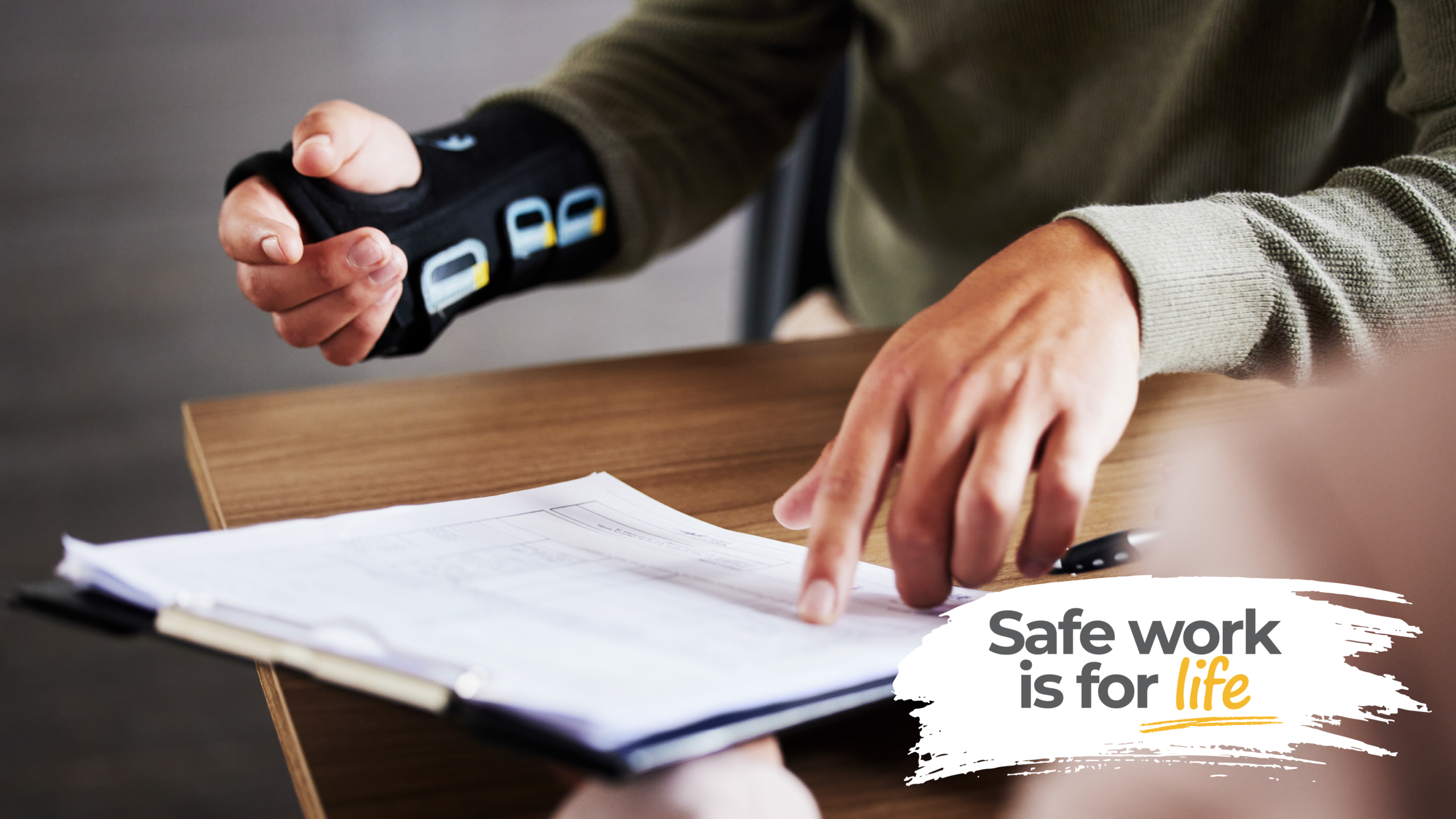
Week three of National Safe Work Month asks workplaces to look past the incident itself and think about what comes next.
It is a shift in perspective that most businesses never quite make. Safety planning tends to stop at prevention, and everything after the injury gets treated as an insurance matter. But the weeks and months following a work-related injury or illness often determine far more about a person’s life than the event that caused it.
The long tail
Two workers sustain a similar back injury on the same day at different businesses.
One is contacted by their employer within a couple of days. Their manager talks with them about what they can still do, arranges modified duties and keeps them connected to the team while they recover. They are back at work in a reduced capacity within a fortnight and fully recovered within a few months.
The other hears nothing for three weeks. They sit at home, increasingly anxious about their job, their income and whether they are seen as a problem. By the time anyone talks about a return, they have lost fitness, confidence and their place in the team. What began as a physical injury has become a much broader problem.
Same injury. Very different lives twelve months later. The difference was not medical. It was how the workplace responded.
Why returning to good work helps
The National Return to Work Strategy sets a vision of minimising the impact of work-related injury and illness so workers can achieve a timely, safe and durable return to work.
Timely means the connection is not left to go cold. Early contact matters, and it does not need to be complicated. A phone call that asks how someone is going, rather than when they will be back, does a lot of work.
Safe means the return does not risk making things worse. Suitable duties need to be genuinely suitable rather than a token gesture or a hazard in disguise.
Durable means it holds. A worker who returns too early, struggles and drops out again has not really returned at all.
Underneath the strategy is a finding that surprises people. When the right supports are in place, returning to good work can support recovery and improve health outcomes. Work is not just something to get back to once you are better. For many people it is part of getting better, because it provides routine, purpose, social contact and a sense of normality that sitting at home does not.
The qualifier is doing real work in that sentence though. It is good work that helps. Work that is poorly matched to someone’s capacity, unsupported or resented by the people around them can set recovery back rather than assist it.
The conversation nobody wants to have
This week’s activity asks workplaces to run through realistic injury and illness scenarios and talk about how they would actually respond.
It feels like a strange exercise until you try it. Pick something plausible for your workplace. A serious back injury. A worker diagnosed with an occupational illness. Someone taking extended leave for a psychological injury. Then walk through it properly.
- Who contacts the worker, and how soon?
- What suitable duties genuinely exist here, not in theory?
- Who covers their work while they are away, and for how long?
- Who explains what is happening to the rest of the team?
- What happens if the recovery takes six months instead of six weeks?
Most businesses discover a gap within the first two or three questions. That is the point. Finding it now costs you an hour. Finding it in the middle of a real situation costs a great deal more, and the person carrying that cost is the injured worker.
Stigma is a safety issue
Something that rarely gets discussed openly is how workers compensation carries a stigma, and it changes behaviour.
Workers hesitate to report injuries because they worry about being seen as unreliable, difficult or a burden on their workmates. They push through pain rather than speak up. They delay claims until a small problem has become a serious one. They stay quiet during recovery because they do not want to make a fuss.
Some of that comes from wider attitudes, but plenty of it is learned on site. The offhand comment about someone milking it. The manager who sighs when an incident form appears. The unspoken understanding that certain people never seem to come back from light duties. Nobody sets out to create that culture and yet it forms easily.
The fix is not a poster. It is what leaders say when an injury is reported, how the first conversation goes and whether people who have been through the process would recommend it to a workmate. If you are not sure where your workplace sits, that last question is a useful one to ask.
New work, new risks
Part of thinking about the future is accepting that the risks themselves are moving.
Technology changes what people do and how they are monitored while doing it. Automation removes some hazards and introduces others. Climate brings heat, smoke and weather exposure into jobs that never used to consider them. Changing work arrangements shift where people work, how isolated they are and how clearly the line between work and home is drawn.
None of this means starting from scratch. It does mean your risk assessment should not be a document you inherited and have never revisited. The work has changed. The assessment should have changed with it.
Where we fit in
At Job Connect, we see the recruitment side of this regularly. When a worker is off for an extended period, businesses often need cover quickly, and getting the right person in makes the difference between a team that copes and a team that quietly falls apart. It also takes pressure off the person recovering, who tends to worry about their workmates as much as themselves.
We also offer safety inspections and safety plans, which are worth having in place well before you need to test them.
Get in touch today to find out more about how our temporary cover, safety inspections and safety plans solutions.